What is a felt ceiling? Acoustic comfort with Heart Felt
A felt ceiling uses sound-absorbing felt panels to help reduce echo. The features and uses of Heart Felt ceilings.
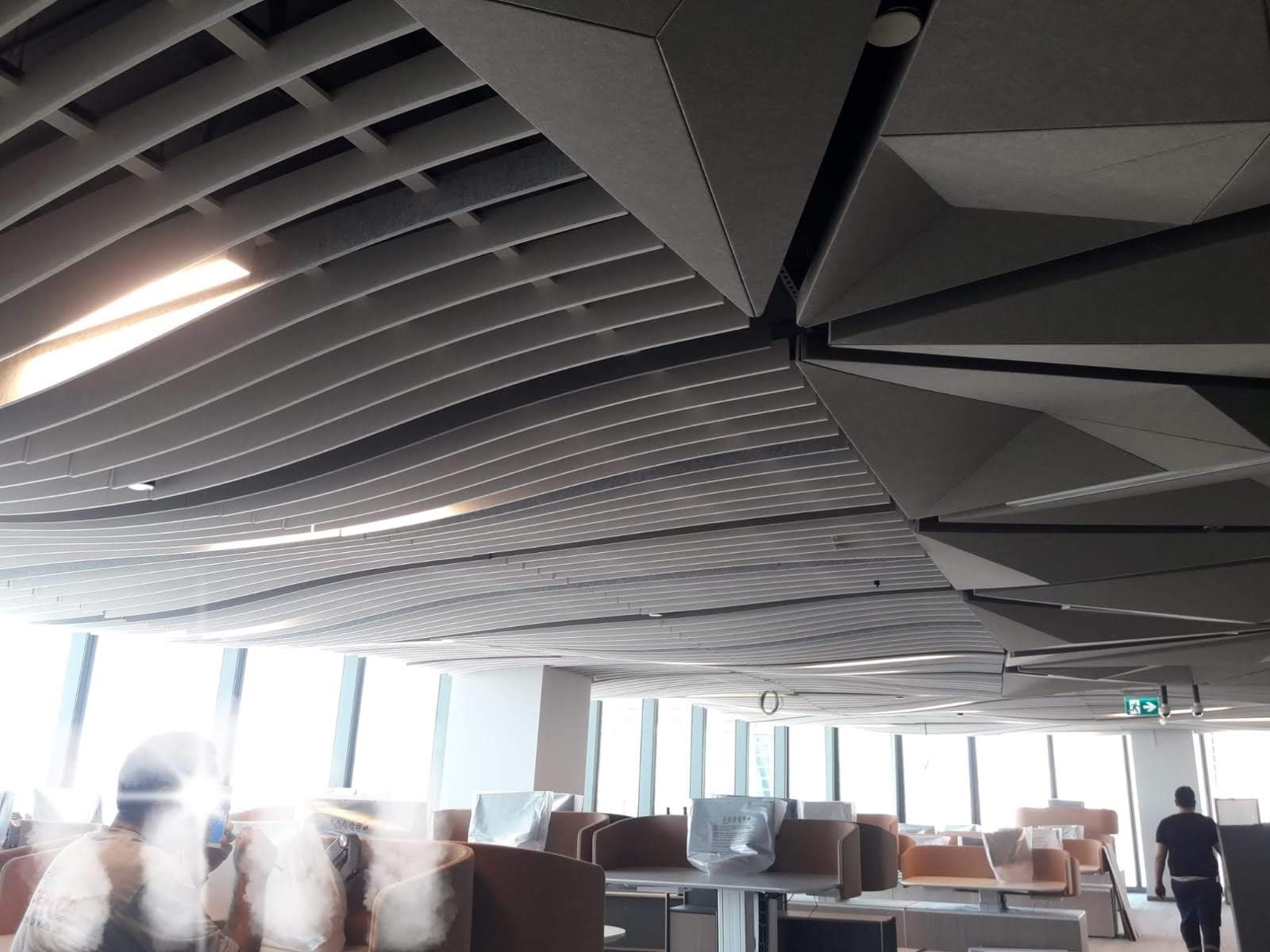
When conversations blur together, phone calls become difficult, or a room feels noisy even when it is not crowded, echo is often the cause. A felt ceiling uses sound-absorbing felt panels to help reduce that echo.
How does felt affect sound?
Hard, flat surfaces reflect sound back into a room. Felt, with its fibrous and porous structure, absorbs part of the sound energy. Felt panels on the ceiling reduce the total reflection in a space and help sound decay faster. The result is clearer speech and a calmer environment.
Ceilüx Heart Felt ceilings
Ceilüx supplies felt ceilings under the name Heart Felt. The felt panels are designed as part of the ceiling's visual language: not just an acoustic material, but a surface that adds to the character of the space.
Where is it used?
- Open-plan offices and work areas
- Meeting and training rooms
- Halls and multipurpose spaces
- Waiting and reception areas
We cover offices and meeting rooms in detail in echo in offices and felt panels.
Felt and perforated ceilings
Acoustic needs do not have to be met by a single product. Ceilüx perforated panels without LED also use acoustic felt behind the perforations, so a felt ceiling in one area and an acoustic perforated ceiling in another can be planned together. For the perforated side, read acoustics of perforated ceilings.
Setting the acoustic target
How much felt ceiling to use and where depends on the volume of the space, the hardness of the other surfaces and how the space is used. Target acoustic values are set by a project-specific calculation, and the layout follows that calculation.
Summary
A felt ceiling improves acoustic comfort while adding a warm, soft texture to the ceiling. To choose the right product and layout, read choosing a felt ceiling, and for your project you can request a site survey.