Choosing a multipanel ceiling: panel width, height and joints
How 30, 80 and 130 mm panel widths, 15, 39 and 64 mm heights and open or closed joints change the look of a multipanel ceiling.
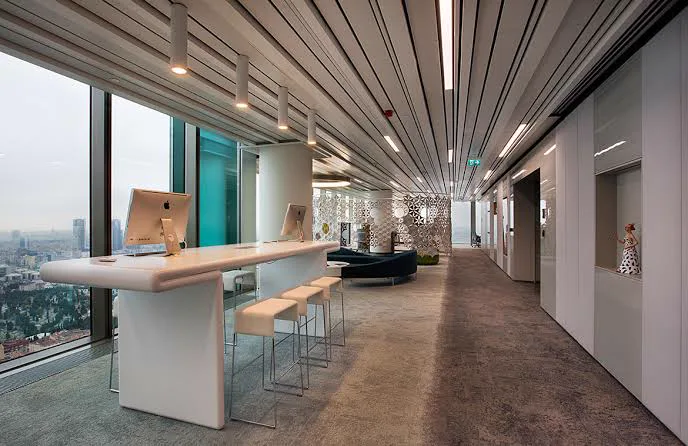
The look of a multipanel ceiling comes from three basic decisions: panel width, panel height and the joint. This article explains how each one affects the ceiling.
Panel width: 30, 80 and 130 mm
Narrow panels draw fine, dense lines; wide panels give a calmer surface. Using the three widths together defines the ceiling's character. The proportion and order of widths are chosen according to the size of the space and the sense of movement you want.
Panel height: 15, 39 and 64 mm
Panel height changes the depth you feel when looking up. Taller panels cast more shadow with their sides and make the ceiling more sculptural. Combining panels of different heights creates a relief effect on a flat ceiling.
Joint: open or closed
The 20 mm joint between panels can be left open or closed.
- Open joint: dark shadow lines appear between panels; the ceiling looks more graphic.
- Closed joint: the surface looks more continuous; the lines soften.
Colour and finish
The panels are polyester-coated aluminium. Colour affects how strongly the rhythm reads: light colours soften it, dark colours bring the shadow lines forward.
Order of decisions
- Size of the space and panel direction
- Proportion and sequence of panel widths
- Panel heights
- Joint and colour
Conclusion
Taken together, these decisions turn a multipanel ceiling into one made for the space. For office and corridor projects, read multipanel ceilings in offices and corridors, or request a site survey for your project.